A Wapping Success!
Article by Fran Taylor
Christmas seems a long time ago, but better late than never, here is a look back at the excellent Oxted Offshore “Freezer Rally” Christmas Lunch on 5 December 2024.
Wapping was the chosen location, destination The Prospect of Whitby. Built in 1520 The Prospect of Whitby lays claim to being the oldest riverside tavern in the UK. It was formerly known as The Pelican, and later as the Devil’s Tavern on account of its dubious reputation – so a highly appropriate venue for Oxted Offshore!
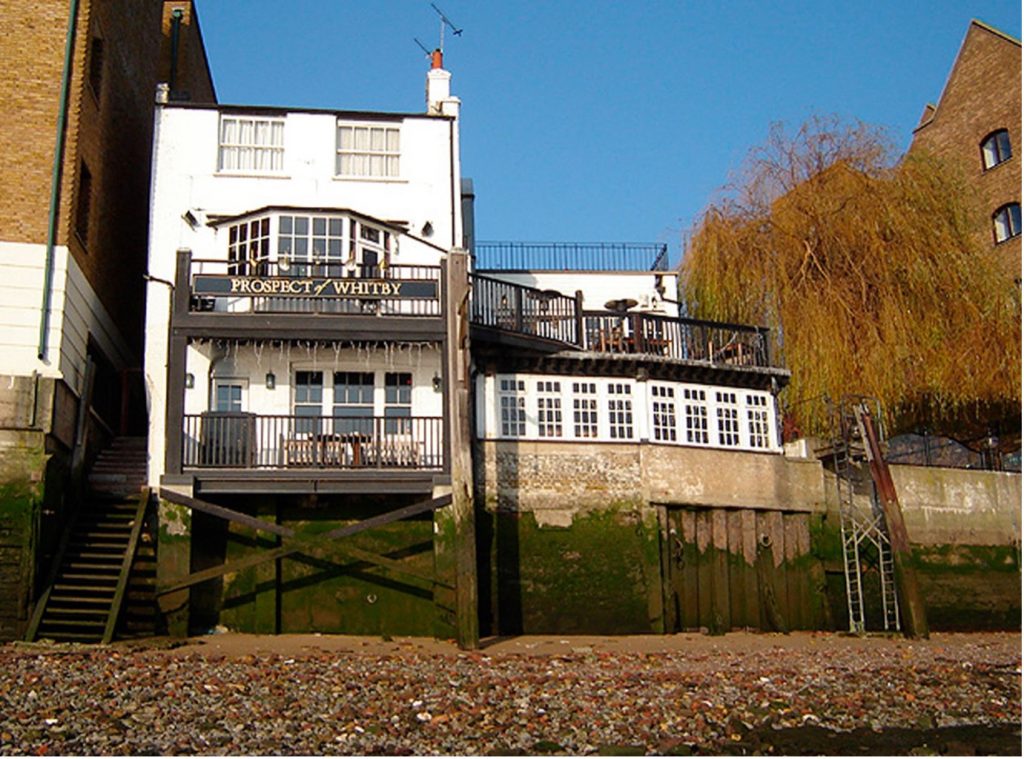
In former times it was a meeting place for sailors, smugglers, cutthroats and footpads. Sir Hugh Willoughby sailed from there in 1553 in a disastrous attempt to discover the North-East Passage to China.
The pub was said to be “The usual place for hanging of pirates and sea-rovers, at the low-water mark, and there to remain till three tides had overflowed them” Execution Dock was actually by Wapping Old Stairs and was generally used for dispatching pirates. In the 18th century the first fuchsia plant in the United Kingdom was sold at the pub!
Following a fire in the early 19th century, the tavern was rebuilt and renamed The Prospect of Whitby after a Tyne collier that used to berth next to the pub. The Prospect was listed as a Grade II listed building in December 1950 and underwent a renovation in 1951 to double the interior space. All that remains from the building’s earliest period is the 400-year-old stone floor and a rare pewter-topped bar with old barrels and ships mast built into the structure. Today the pub features 18th century panelling and a 19th century façade.
Notable customers have been Charles Dickens, Samuel Pepys, Judge Jeffries and artists Whistler and Turner. Two of the pub’s most famous visitors were Princess Margaret for her “date nights” with Peter Townsend, and myself (Fran Taylor) when I ran my first Corporate Communications business from Metropolitan Wharf just a few yards down Wapping Wall!
Getting to Wapping was an equally historic experience. Most OOSC members chose to
travel by train from Oxted, switching to the London Overground at Norwood Junction. This route goes underground at Rotherhithe to pass under the river via the Thames Tunnel. Built between 1825 and 1843 by Marc Brunel and his son, Isambard, the Thames Tunnel is the first tunnel known to have been constructed successfully underneath a navigable river. It is 1,300 ft long at a depth of 75ft. Several failed attempts had been made before the Brunels stepped in, and numerous disasters beset progress – mainly floods, subsidence and lack of money! The tunnel was finally opened to the public on 25 March 1843.
Although it was a triumph of civil engineering, the Thames Tunnel was not a financial success. It had cost £454,000 to dig and another £180,000 to fit out – far exceeding its initial cost estimates…sounds familiar? The tunnel was originally designed for horse-drawn carriages. Proposals to extend the entrance to accommodate wheeled vehicles failed owing to cost, so it was used only by pedestrians. But it became a major tourist destination, attracting about two million people a year, each paying a penny to pass through.
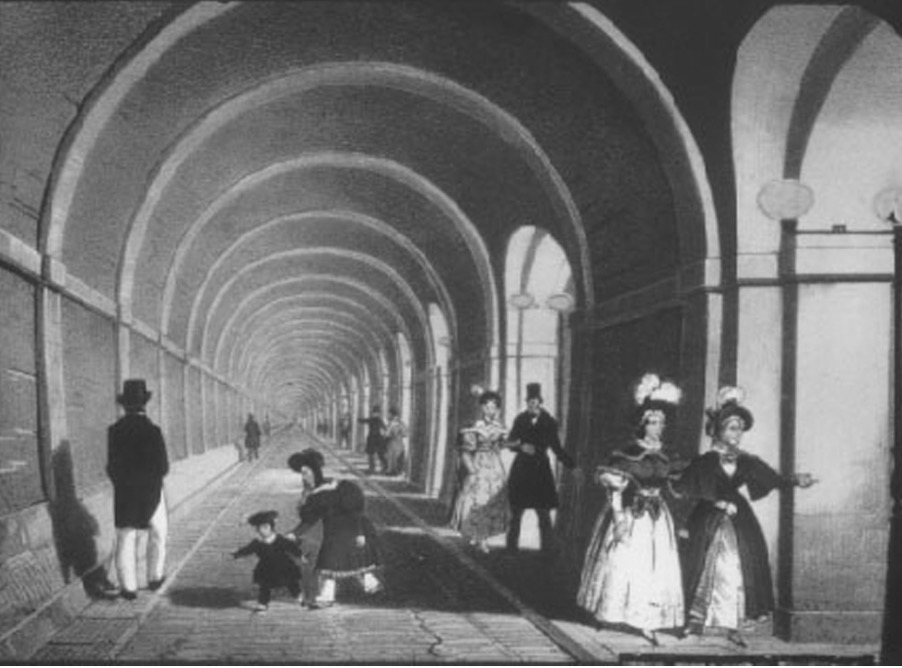
The tunnel was purchased in September 1865 at a cost of £800,000 (equivalent to £97 million in 2023) by the East London Railway Company and converted into a railway tunnel. The first train ran through four years later.
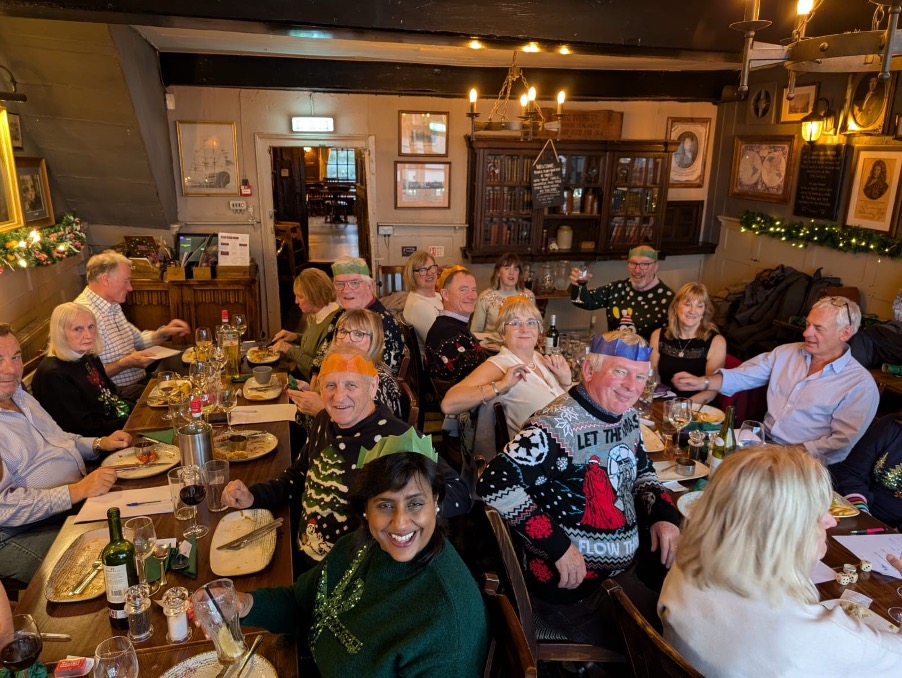
Wapping was an absolutely splendid venue for our Christmas Lunch and 24 members attended. We had the Pepys Room booked for the meal, a private room upstairs with great views of the River Thames, and an eclectic array of Christmas jumpers. The Commodore ran a nautical-themed quiz won by Paul Jeffs and Lynn Garne. The food and service left a wee bit to be desired, but the venue staff were genuinely mortified and awarded an extremely generous discount, so the lack of gravy and late arrival of desserts were quickly forgotten, helped by a vast quantity of alcohol consumed.
Very many thanks to Penny and Kevin for organising such a fascinating day that we all thoroughly enjoyed.