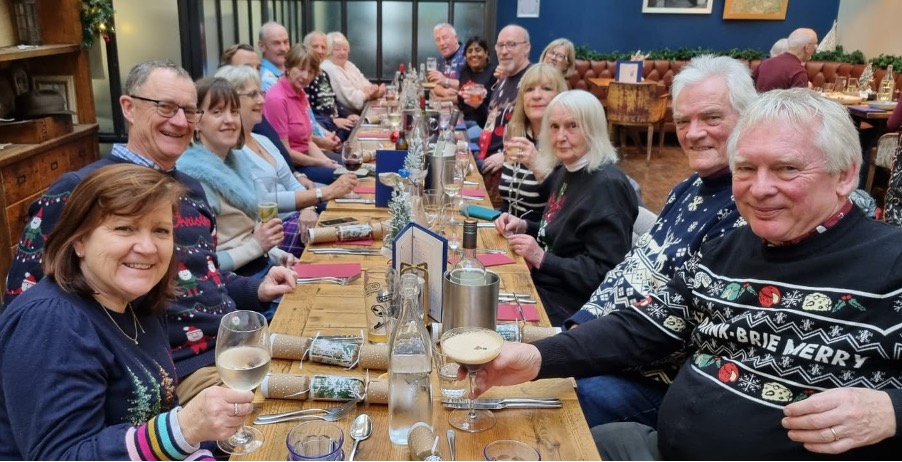
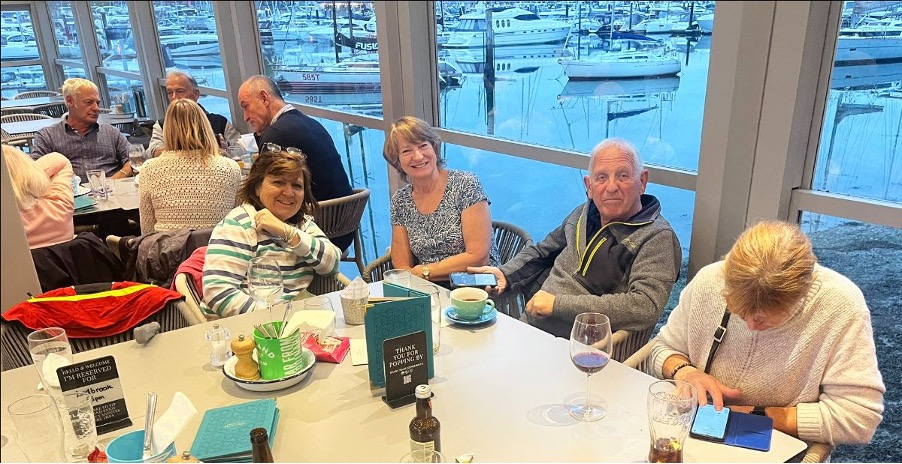
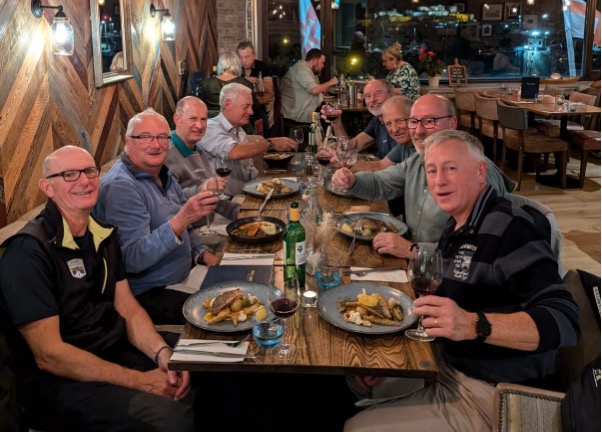
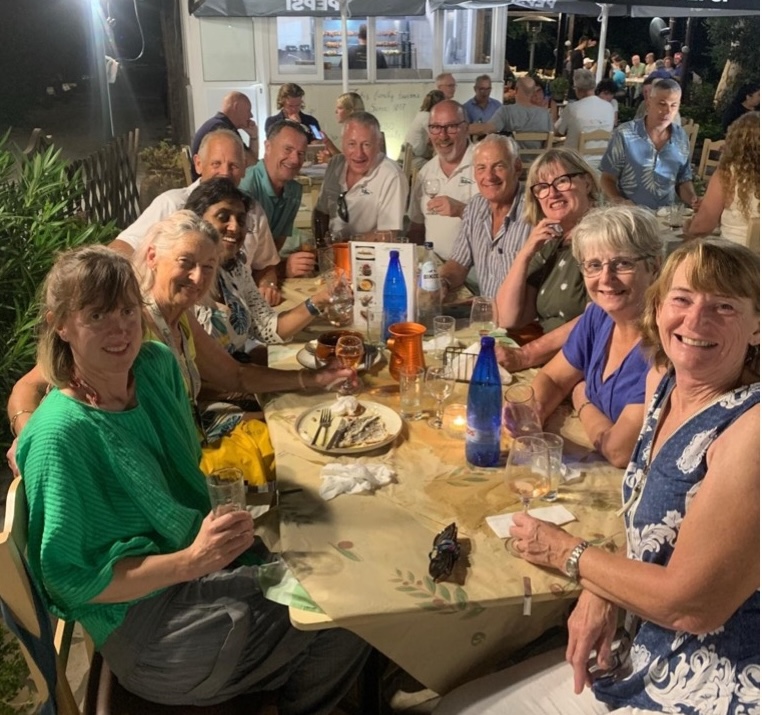
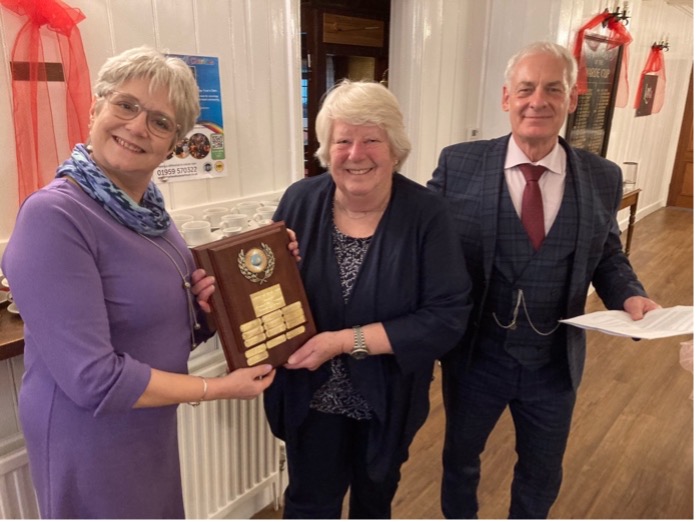
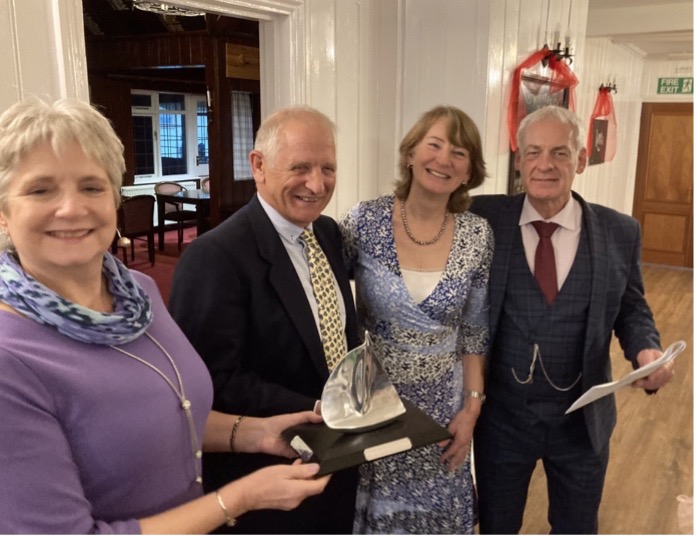
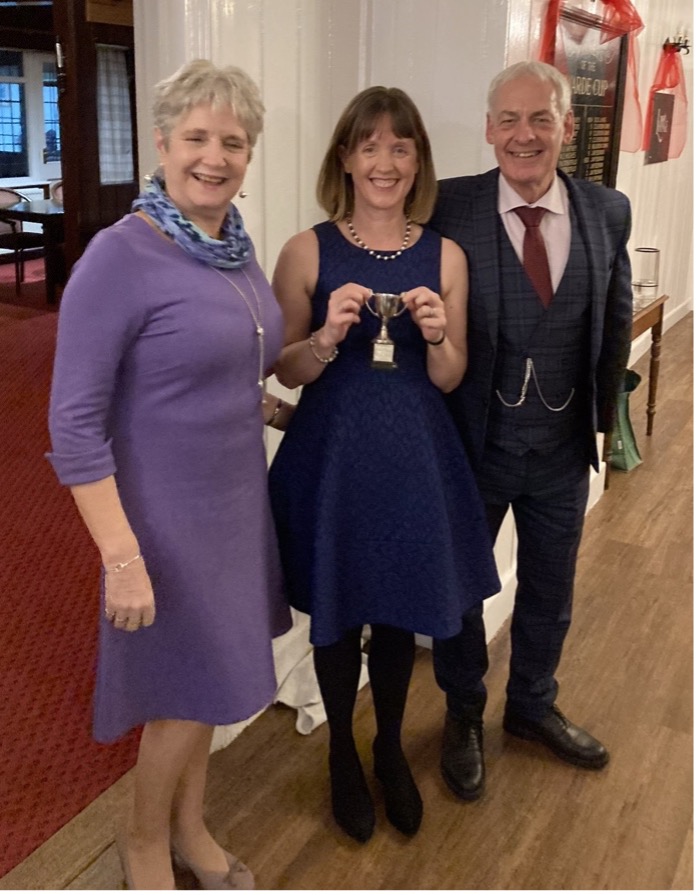
A festive time was had by 18 Oxted Offshore shipmates at the Christmas Rally to Greenwich on 10 December. The day started with a visit to the Pirates exhibition at the National Maritime Museum – which was surprisingly fascinating. It was then a short walk to The Old Brewery in the Old Royal Naval College for an extremely tasty Christmas lunch with all the trimmings! Many thanks to Kevin Roberts for organising the day.
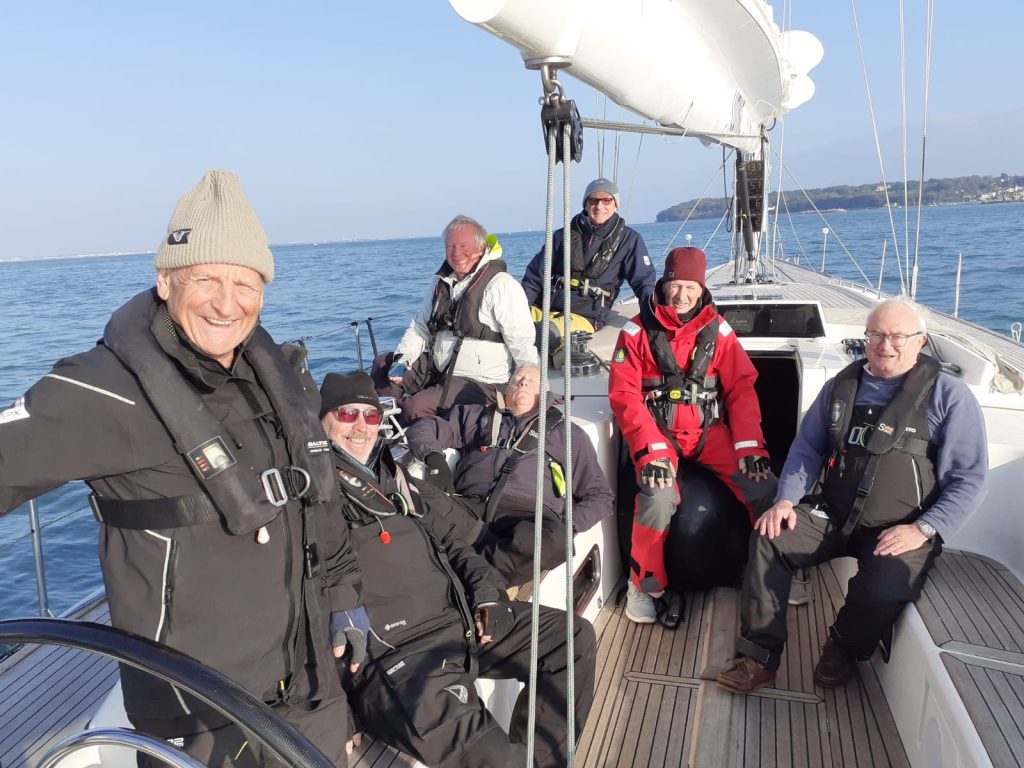
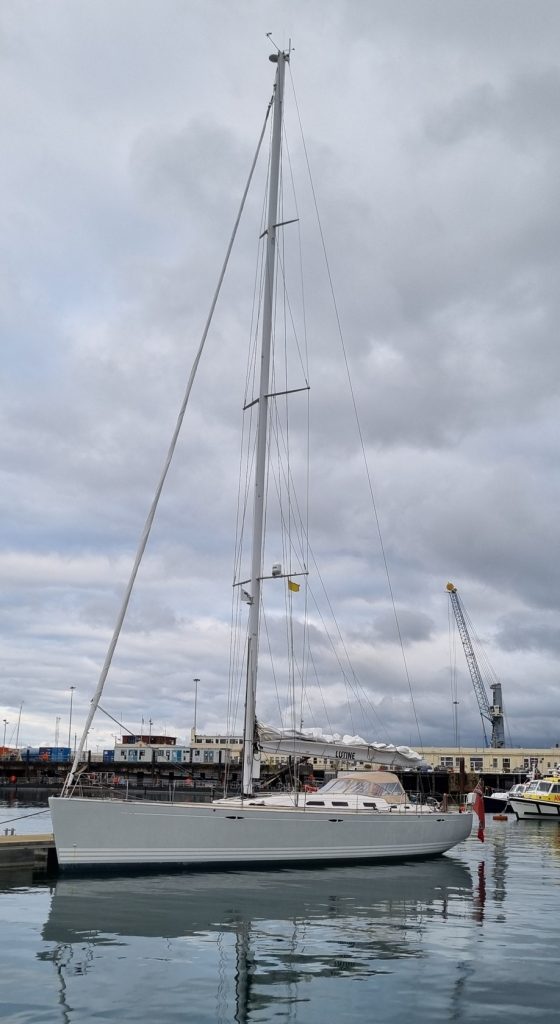
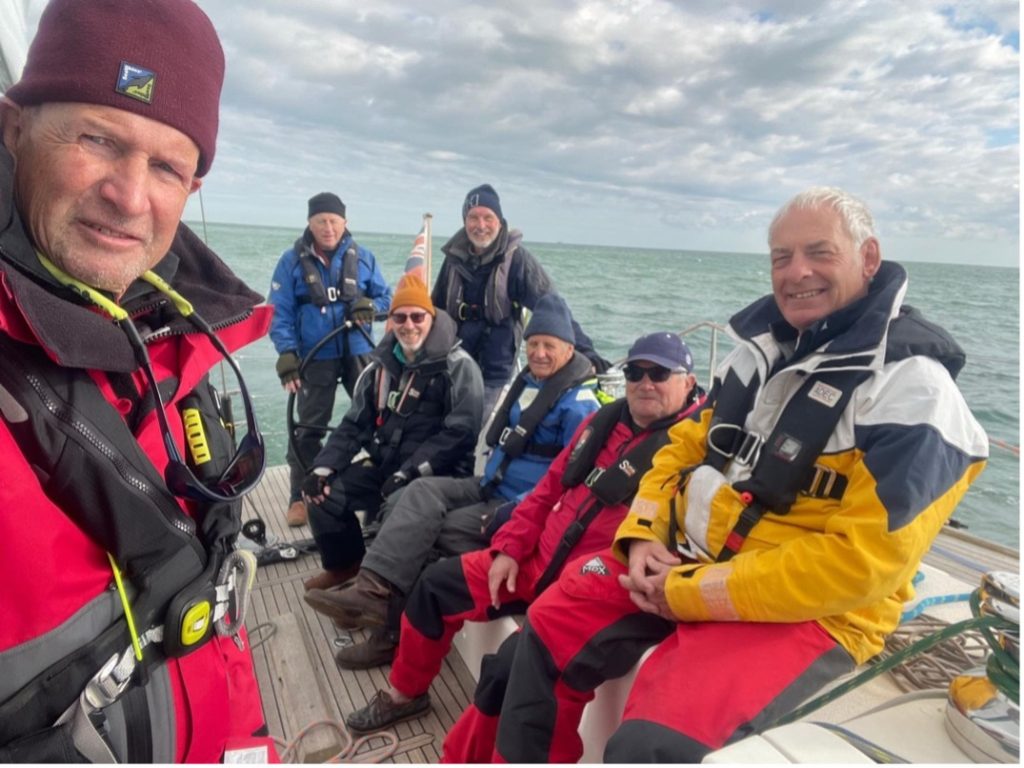
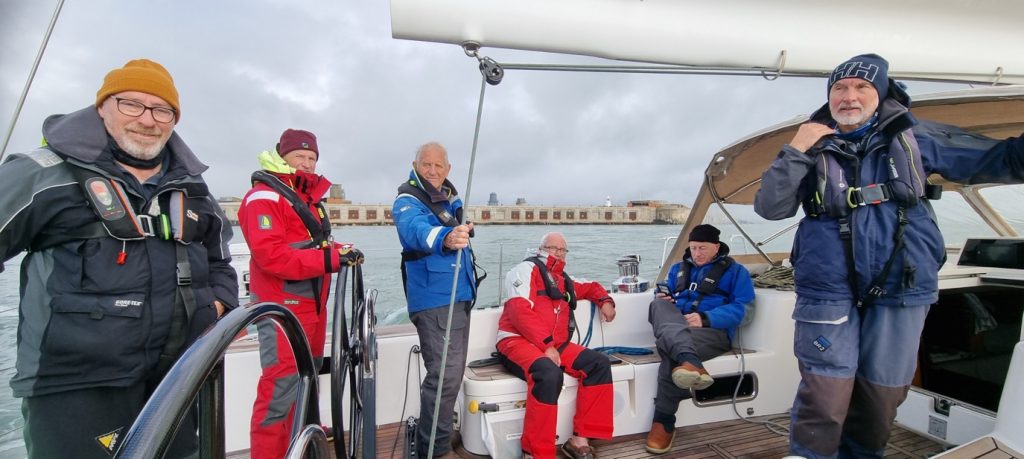
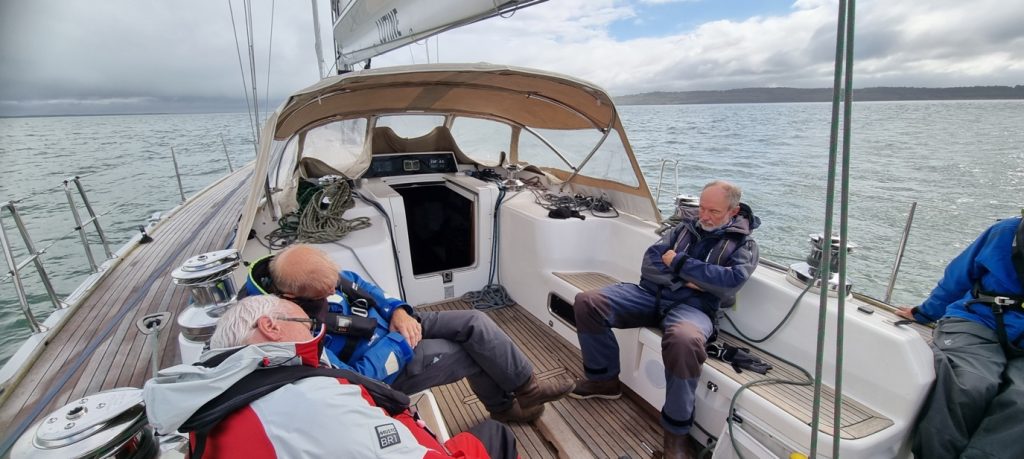
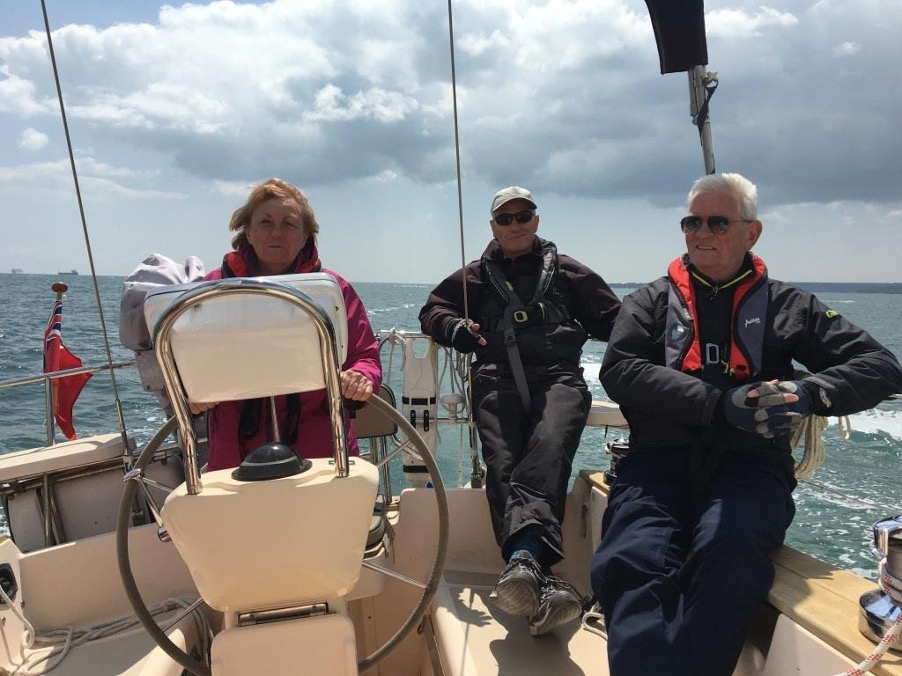
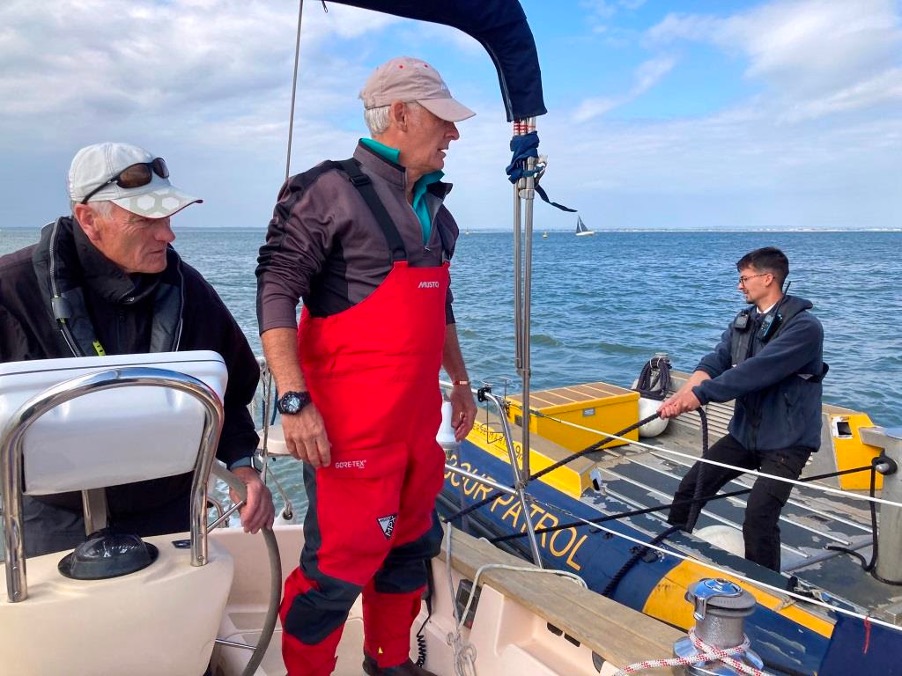
On the long weekend of 10-13 October 2025, seven blokes from the Club and the skipper from Lloyds of London Yacht Club (LLYC), took LLYC’s X-55, Lutine, out for our annual sailing adventure with LLYC skipper Mick Brown.
Howard, Kevin L, Richard, Jeremy, Mark, Peter & Graham met up at Haslar Marina on Thursday evening for dinner at The Castle Tavern. We set off on Friday morning for a gentle sail across to Swanage where we dropped anchor for a calm night on board.
On Saturday we sailed across to Weymouth and moored on a deserted Town Quay and on Sunday we headed back east to berth at Shepards Marina in Cowes. Our final sail was home to Haslar in calm seas. After several years of heavy weather, this time we experienced much more benign conditions with light winds all weekend.
Visit to HM Coastguard’s Joint Rescue Coordination Centre – a fascinating insight
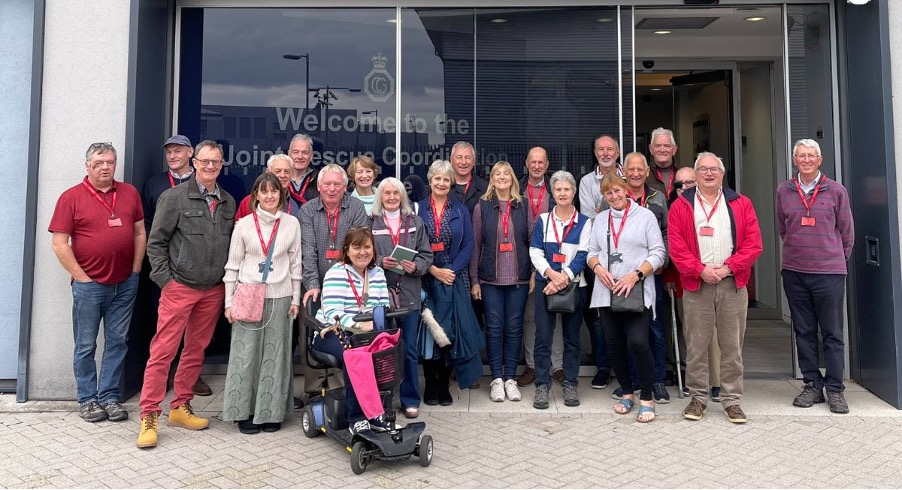
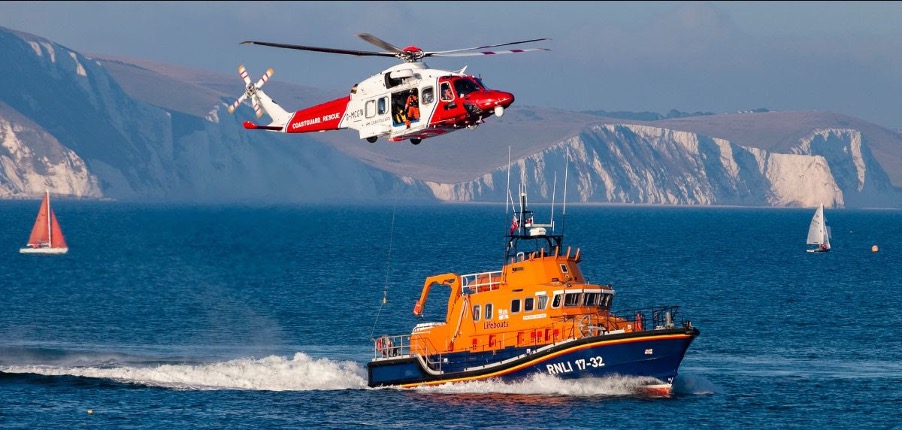
22 members of Oxted Offshore and Ashdown Sailing Club gathered in Fareham on Thursday, 16 October for a tour of HM Coastguard’s Joint Rescue Coordination Centre. Located at the end of a business park near Titchfield, with not even a glimpse of the sea, it was immediately obvious that this was no ordinary Coastguard lookout!
We were met by Maritime Operations Officer Katie, who took us upstairs to a large meeting room and gave an excellent presentation about the operation and their critical role. We were aware of the birds-eye view of the “command centre” below us, but the blinds were drawn and we had to wait!
It’s quite difficult to summarise what happens in Fareham, but essentially they co-ordinate and deploy all the resources needed to respond to every distress call for help at sea, or inland emergencies such as flooding, major pollution or lost contact with an aircraft. Calls to Coastguards or 999 are directed into the JRCC, but they also receive alerts via satellite from DSCs and MayDay calls, or via EPIRBs, MOBs, PLBs, SARTs and ELTs. They receive direct requests for help from the police, ambulance and fire services, and even Border Force, the military and other specialist agencies.
The JRCC’s specialist functions include long-range search and rescue over 1.24 million square NM, covering the mid-Atlantic from where it meets Canadian and Portuguese borders. They are able to monitor any UK registered vessel in distress anywhere in the world, communicating with local rescue services if needed. And they are home to the Strategic Planning Room used for major strategic or security incidents.
The JRCC has just 96 staff split into four teams who work 12-hour shifts and cover maritime, aviation and mission control. Maritime Operations Officers like Katie qualify after 16 weeks of training and are supported by Senior Operations Officers, Network Commanders and, at the top, an Operations Manager. Each rank is identified by insignia, rather similar to the Royal Navy.
The centre has an impressive range of resources in its arsenal. As well as its own all-weather craft, it triggers deployment of the 450+ lifeboats maintained by the RNLI and other charities. The Coastguard Rescue (the “boys in blue”) has 294 teams of 3,000+ volunteers and 106 full time officers. Each team is trained to deal with location specific conditions from mud to dangerous cliffs and rocks.
The Aeronautical Operations includes 10 helicopter bases, each with two “welcome sight” red and white search and rescue craft. Their air base at Lydd in Kent operates four Schiebel S-100 drones used to provide real-time, live data and situational awareness to command centres. HM Coastguard also uses fixed-wing aircraft to support maritime search and rescue and counter-pollution missions. These are contracted through commercial companies.
Co-ordinating all this is surely a huge responsibility for the teams at Fareham? So when it came to “any questions” at the end of Katie’s presentation there were plenty. She was quizzed on everything from the technicalities of satellite communications to drug smuggling, and she answered our questions with great expertise! These are a few of the many things we learned:
The UK was the first ever nation to successfully commission a Hybrid MEO/LEO Antenna. This is a system that combines technologies to seamlessly switch between Low-Earth Orbit (LEO) and Medium-Earth Orbit (MEO) satellites for more reliable, high-performance connectivity.
Even RNLI volunteers’ pagers are triggered from Fareham.
Requests for Ch16 radio checks from leisure craft are dealt with at the JRCC, and they are very happy to oblige unless they are up to their eyes in an emergency. What many of us present didn’t know is that you can also call CH67 for a radio check in the Solent, or CH65 for a radio check anywhere in UK waters.
The Round the Island Race is usually a busy day for the JRCC! This year they brought in 8 additional staff to deal with the MoBs, radio checks and incidents, but all went smoothly.
The JRCC provided support for Border Force in Kent who received a tip-off via local police about a yacht arriving regularly at night with illegal drugs. HM Coastguard’s knowledge of viable mooring locations enabled Border Force to be ready and waiting when the yacht paid its final visit!
You can call 999 and ask for Coastguard – JRCC encourage people to do this.
The JRCC works with numerous commercial partners and agencies, including Garmin who share details of their registered personal location devices for sports, marine and aviation activities.
The JRCC is the only emergency service where the assigned officer stays with the rescue or incident from beginning to end.
10 March this year was a busy day for the JRCC when the container ship MV Solong, travelling at 16.4 knots and with a cargo of alcohol, struck the super tanker Stena Immaculate at anchor off Grimsby. Stena Immaculate was transporting 220,000 barrels of aviation fuel for the US Air Force. Both vessels caught fire. The JRCC deployed RNLI crews from Bridlington, Mablethorpe, Skegness and Cleethorpes, plus a crew transfer vessel, a search and rescue helicopter and a fire-fighting aircraft.
At the end of the session Katie rolled up the blinds to reveal the activity in the control room below. Each work station had four sizeable monitors feeding different data for each incident and we noticed familiar navigation charts on some. It didn’t appear to be the busiest day of the year but you could sense that everything was incredibly well organised and under control. On reflection it was reassuring to see that what could be a life-or-death scenario for somebody out there was being handled in a calm and well-rehearsed way by skilled and highly experienced officers.
The afternoon ended with an early supper at The Jolly Sailor on the waterfront in Bursledon, organised by Kevin Ludbrook. We had exclusive use of their lovely enclosed seating area (with heaters) perched on the pontoon. A great venue, excellent food and the perfect end to a fascinating day!
UK Coastguard coordinates Falklands sailor rescue
A few days after our visit Jeremy Taylor spotted this report on BBC News:
“A solo yachtsman who survived a night in a damaged vessel in the South Atlantic has thanked coastguards 8,000 miles away in the UK for co-ordinating his rescue. Steve Winn was sailing to Chile from the Falkland Islands on 17 September when his yacht collided with an object, thought to be a shipping container, in Argentinian waters. The islands’ maritime authority notified the Joint Rescue Co-ordination Centre in Fareham, Hampshire, which contacted co-ordination teams in Argentina and Spain. Working together, they located the yacht 108 nautical miles (200km) south-west of the islands. Mr Winn was taken back to Stanley by a fishing trawler.”
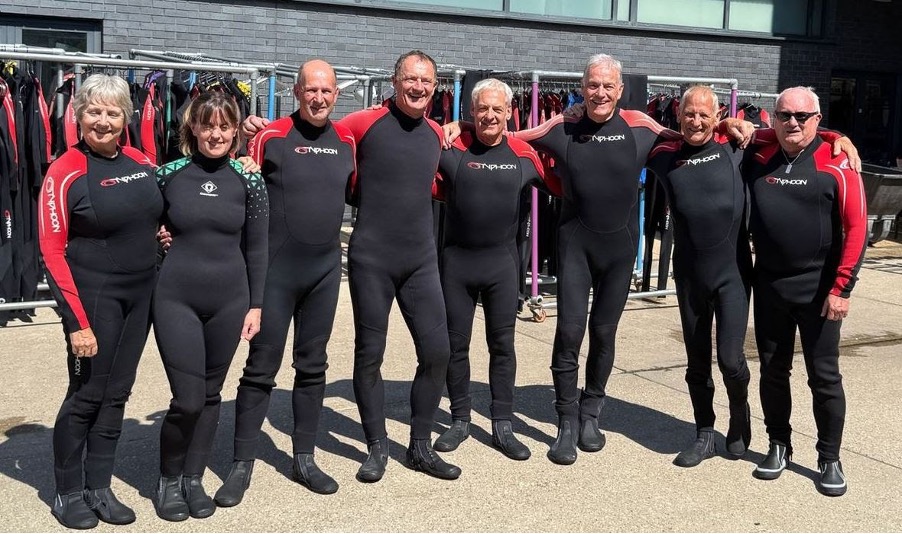
Reflections by organiser Duncan Southcott with “paddlers” Kevin & Penny Roberts, Richard Aust, Paul Jeffs, Peter Puttock, Howard Richardson, Sarah Southcott
Eight members of Oxted Offshore met up for a different water experience on Friday 15 August at the Lee Valley White Water Rafting Centre in sunny Essex.
The ‘Neoprene Warriors’ duly arrived on time, some having fortified their energy levels with a cooked breakfast. The first challenge was to get into the wet suits, but with a little help from their friends everyone eventually looked the part!
The briefing broke the news of a pre-swim to check what you do if you were to fall out or capsize the raft! Everyone looked at organiser Duncan, who claimed ignorance of that specific instruction but explained that’s what happens when rafting! Everyone survived the swim down a gentle part of the run, with Paul Jeffs enjoying it so much he went further than intended!
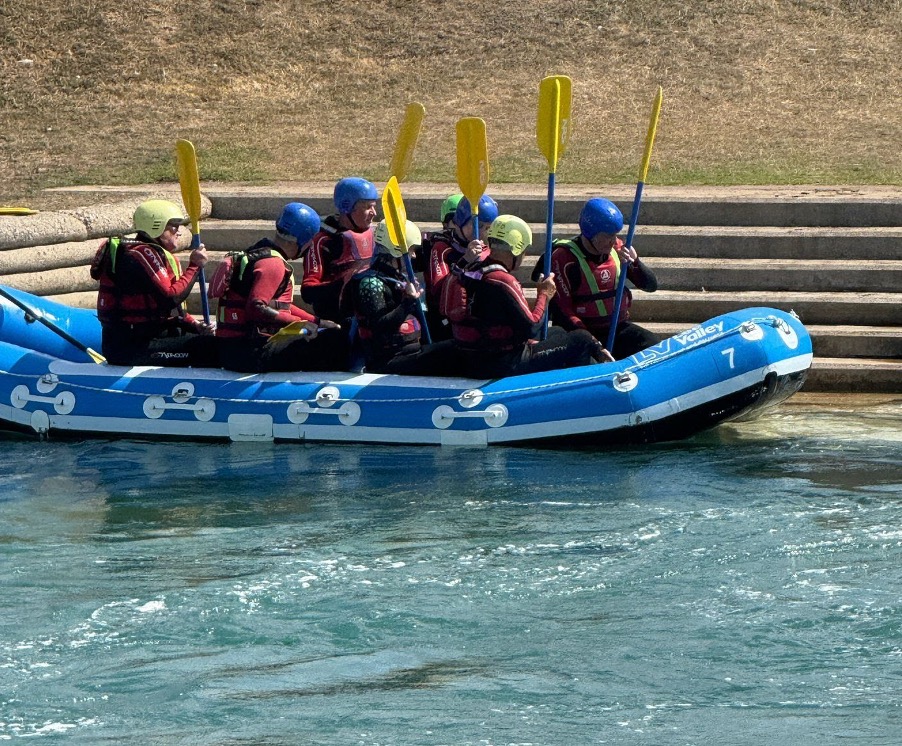
With the swim over we got into the raft where we learned to shelter in the bottom of the boat with paddles vertical, plus some basic paddle manoeuvres forwards and backwards. Everyone trying to keep in time with the forward paddlers was the tricky bit! Then up the ramp for the first run!
Our guide Sarah was keen that we practised our safety manoeuvre into the bottom of the raft. We bounced down into the biggest wave, all sheltering at the bottom of the boat – and then it started tipping up! Despite the best efforts of Sarah, we lost seven paddlers into the water! Kevin and Duncan at the front managed to swim to the shallow side with their oars! Sarah finished up on the other side of the river. Peter ended up down the course. Richard, Penny and Paul were helped out with ropes whilst Howard and Guide Sarah saved the raft! Chaos all round.
It transpired that Guide Sarah got us stuck surfing on the biggest wave without us paddling so we couldn’t manoeuvre. Good job we paid attention to the swimming and safety instructions! Howard, Richard, Kevin, Penny and Duncan managed to get back on the raft to finish the course and safely navigate a second run. Sarah and Peter rejoined for the last three runs, whilst Paul volunteered to become the cameraman for the day! The rest of the runs were fun with us paddling through the waves and practising surfing on the smaller wave with success!
A cooling swim and a shower finished off our White Water Rafting experience followed by Greek food and a relaxing beer, with everyone sharing their personal overboard story and how much water they swallowed!
I think fun was mainly had by all despite the raft of usual puns from Duncan, with some wanting to have another go next year! It was fun organising it and I’ll happily do so again!
RIPTIDE – Howard & Nikki JUS LYMIN’ – Paul, Lynne, Fran & JT NICKNACK – Nick & Gail MAGUS TAO – Peter, Pedro, Duncan & Sarah BOOMERANG – Graham & Angela
Friday 16May – Chichester Marina: The advance party gathered at Chichester Marina, where JUS LYMIN’ is berthed. NICKNACK was also in the marina, taking part in a wonderful charity sailing event for disabled children. RIPTIDE arrived later in the afternoon after a sunny lunch stop at East Head. The group caught up over a lively dinner at Chichester Yacht Club and shared plans for the weekend ahead.
Saturday 17May – Buckler’s Hard Yacht Harbour: Next morning there was a queue to exit the small lock at Chichester Marina but all OOSC boats had escaped by noon for the gentle sail westward to Buckler’s Hard Yacht Harbour on the Beaulieu River. The weather held beautifully, sunshine and light winds made for a pleasant and relaxed passage.
Mid-journey drama struck when JUS LYMIN’ suffered a blocked fuel pipe off Calshot. Thankfully, SeaStart came to the rescue and had them swiftly back on course. At Buckler’s Hard the harbourmaster kindly arranged a separate berthing area for the OOSC fleet, making for a smooth and welcoming arrival.
The fleet was joined by MAGUS TAO, having sailed from Haslar Marina, and the crews gathered aboard RIPTIDE for pontoon drinks in the early evening. The convivial atmosphere delayed plans to dine at the local food van, so by the time we were ready to eat, the curry had sadly sold out! Fortunately, all boats were well-provisioned and crews could rustle up supper on board.
Sunday 18 May – Yarmouth Harbour: With the river at low tide, a morning walk into Beaulieu village for coffee proved a popular diversion. Departures began shortly after midday, with boats drifting leisurely downriver at five knots past the Lepe Red beacon, then setting a course across the Solent toward Yarmouth. En route, BOOMERANG (who had been moored at Gins Farm the night before on a separate rally) joined the fleet.
Once the boats were safely moored in Yarmouth, the crews enjoyed another round of pontoon drinks before heading to The Bugle Inn for dinner, where fourteen of us enjoyed a jolly evening of good food and great company.
Monday 19 May – Homeward Bound: BOOMERANG stayed on in Yarmouth for an extra night while the rest of the fleet set sail for home. We couldn’t have asked for better weather: warm sunshine, gentle breezes, and calm waters – a perfect weekend of sailing and socialising.
Thanks to everyone who joined the rally, and a special thanks to Howard and Nikki for organising such an enjoyable weekend. We look forward to seeing you on the water again soon!
Christmas seems a long time ago, but better late than never, here is a look back at the excellent Oxted Offshore “Freezer Rally” Christmas Lunch on 5 December 2024.
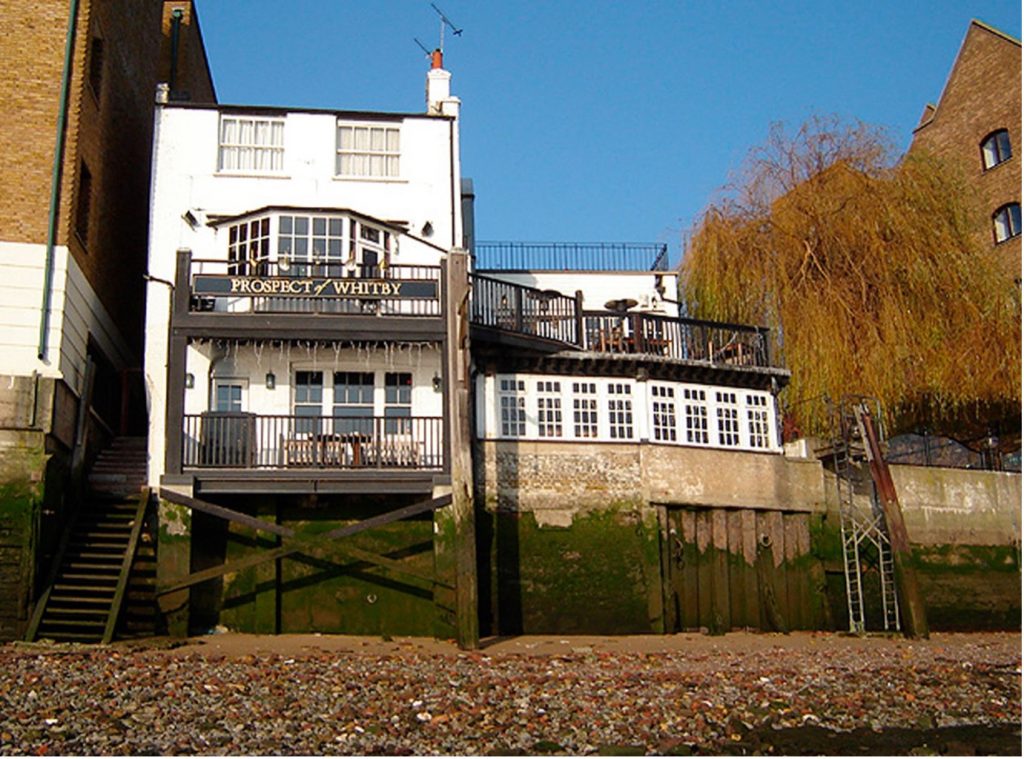
Wapping was the chosen location, destination The Prospect of Whitby. Built in 1520 The Prospect of Whitby lays claim to being the oldest riverside tavern in the UK. It was formerly known as The Pelican, and later as the Devil’s Tavern on account of its dubious reputation – so a highly appropriate venue for Oxted Offshore!
The Prospect of Whitby from the Thames at Low Tide
In former times it was a meeting place for sailors, smugglers, cutthroats and footpads. Sir Hugh Willoughby sailed from there in 1553 in a disastrous attempt to discover the North-East Passage to China.
The pub was said to be “The usual place for hanging of pirates and sea-rovers, at the low-water mark, and there to remain till three tides had overflowed them” Execution Dock was actually by Wapping Old Stairs and was generally used for dispatching pirates. In the 18th century the first fuchsia plant in the United Kingdom was sold at the pub!
Following a fire in the early 19th century, the tavern was rebuilt and renamed The Prospect of Whitby after a Tyne collier that used to berth next to the pub. The Prospect was listed as a Grade II listed building in December 1950 and underwent a renovation in 1951 to double the interior space. All that remains from the building’s earliest period is the 400-year-old stone floor and a rare pewter-topped bar with old barrels and ships mast built into the structure. Today the pub features 18th century panelling and a 19th century façade.
Notable customers have been Charles Dickens, Samuel Pepys, Judge Jeffries and artists Whistler and Turner. Two of the pub’s most famous visitors were Princess Margaret for her “date nights” with Peter Townsend, and myself (Fran Taylor) when I ran my first Corporate Communications business from Metropolitan Wharf just a few yards down Wapping Wall!
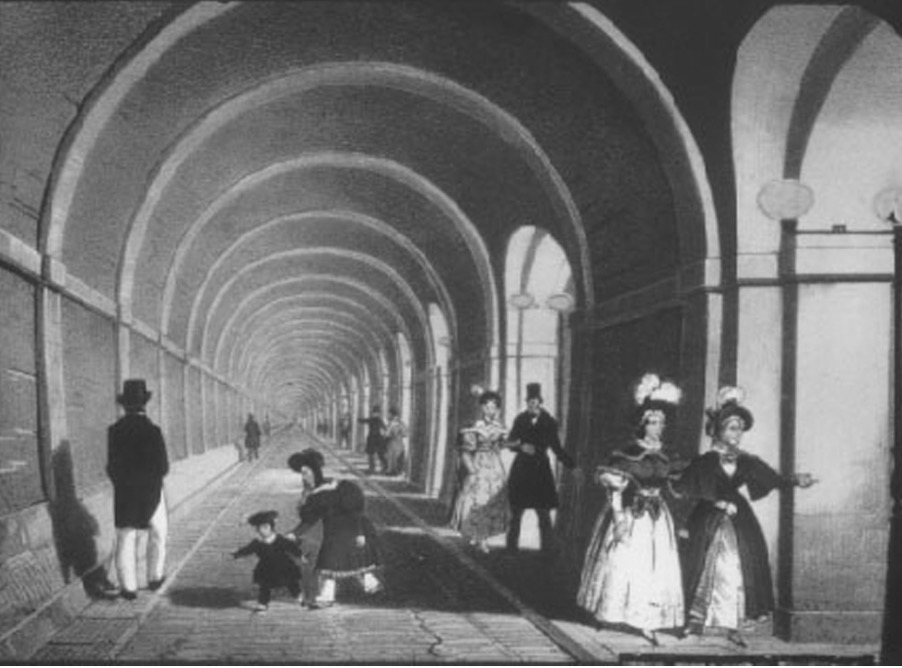
Getting to Wapping was an equally historic experience. Most OOSC members chose to travel by train from Oxted, switching to the London Overground at Norwood Junction. This route goes underground at Rotherhithe to pass under the river via the Thames Tunnel. Built between 1825 and 1843 by Marc Brunel and his son, Isambard, the Thames Tunnel is the first tunnel known to have been constructed successfully underneath a navigable river. It is 1,300 ft long at a depth of 75ft. Several failed attempts had been made before the Brunels stepped in, and numerous disasters beset progress – mainly floods, subsidence and lack of money! The tunnel was finally opened to the public on 25 March 1843.
Although it was a triumph of civil engineering, the Thames Tunnel was not a financial success. It had cost £454,000 to dig and another £180,000 to fit out – far exceeding its initial cost estimates…sounds familiar? The tunnel was originally designed for horse-drawn carriages. Proposals to extend the entrance to accommodate wheeled vehicles failed owing to cost, so it was used only by pedestrians. But it became a major tourist destination, attracting about two million people a year, each paying a penny to pass through.
Brunel’s Thames Tunnel
The tunnel was purchased in September 1865 at a cost of £800,000 (equivalent to £97 million in 2023) by the East London Railway Company and converted into a railway tunnel. The first train ran through four years later.
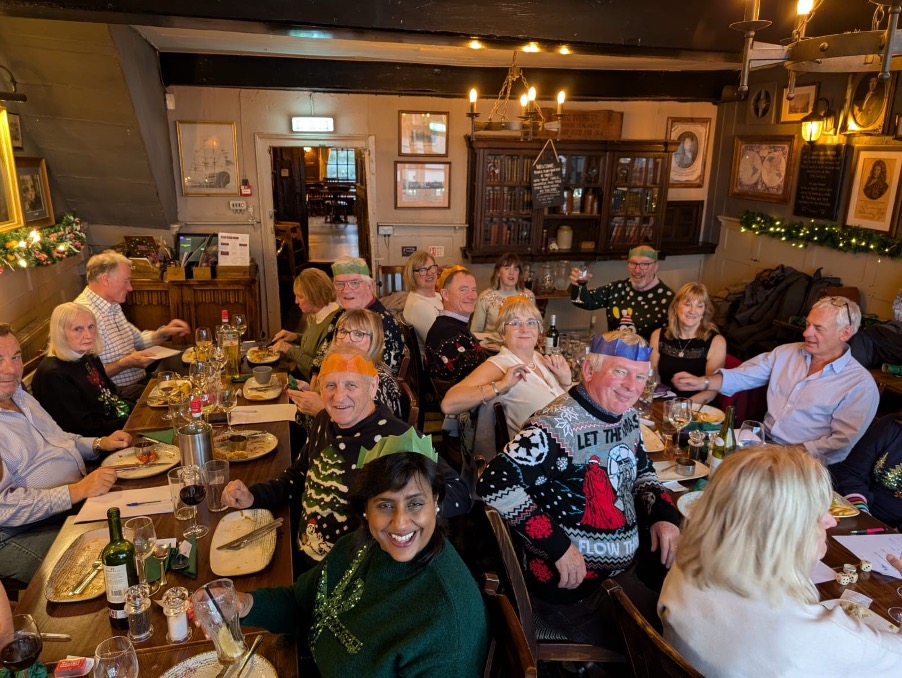
Wapping was an absolutely splendid venue for our Christmas Lunch and 24 members attended. We had the Pepys Room booked for the meal, a private room upstairs with great views of the River Thames, and an eclectic array of Christmas jumpers. The Commodore ran a nautical-themed quiz won by Paul Jeffs and Lynn Garne. The food and service left a wee bit to be desired, but the venue staff were genuinely mortified and awarded an extremely generous discount, so the lack of gravy and late arrival of desserts were quickly forgotten, helped by a vast quantity of alcohol consumed.
OOSC Club Members in the Pepys Room at the Prospect of Whitby
Very many thanks to Penny and Kevin for organising such a fascinating day that we all thoroughly enjoyed.
During the long weekend 11- 14 October, seven blokes from the Club and the skipper from Lloyds of London Yacht Club (LLYC), took LLYC’s X-55, Lutine, out for a sailing adventure. Leading up to the weekend, the wind was looking a bit iffy for the planned trip to Guernsey, the chosen destination for previous years for the Club charter on Lutine, but which never came off due to the weather. However, this year, in the end, the wind looked good by the end of the week to make the trip across the Channel; first stop Alderney, then down to St Peter’s Port, Guernsey.
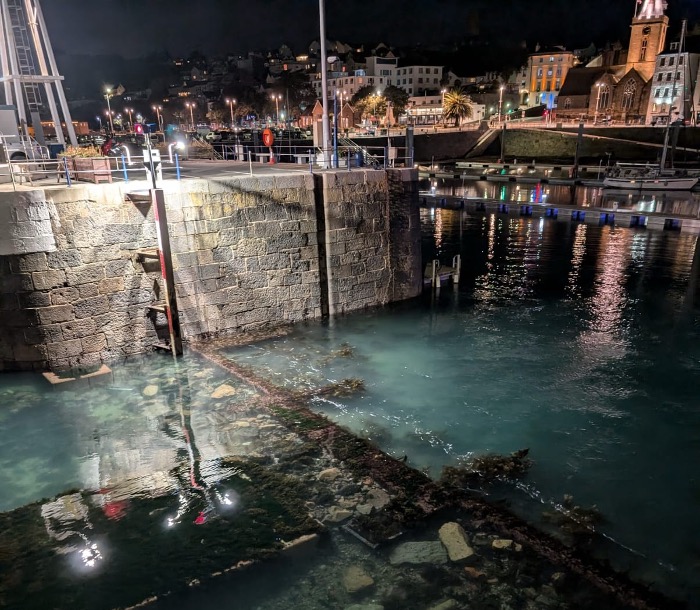
Lutine moored up in St Peter’s Port
The Club members comprising the crew for the trip included Howard R, Richard A, Jeremy T, Mark K, Graham B, Peter P, and yours truly, your Commodore, Kevin R. LLYC skipper for the weekend was Mick Brown.
Oxted Offshore Crew
The weekend started on Thursday night when the majority met in Gosport for a meal at the Castle pub. I arrived later on in the evening travelling down by train after attending an event in London.
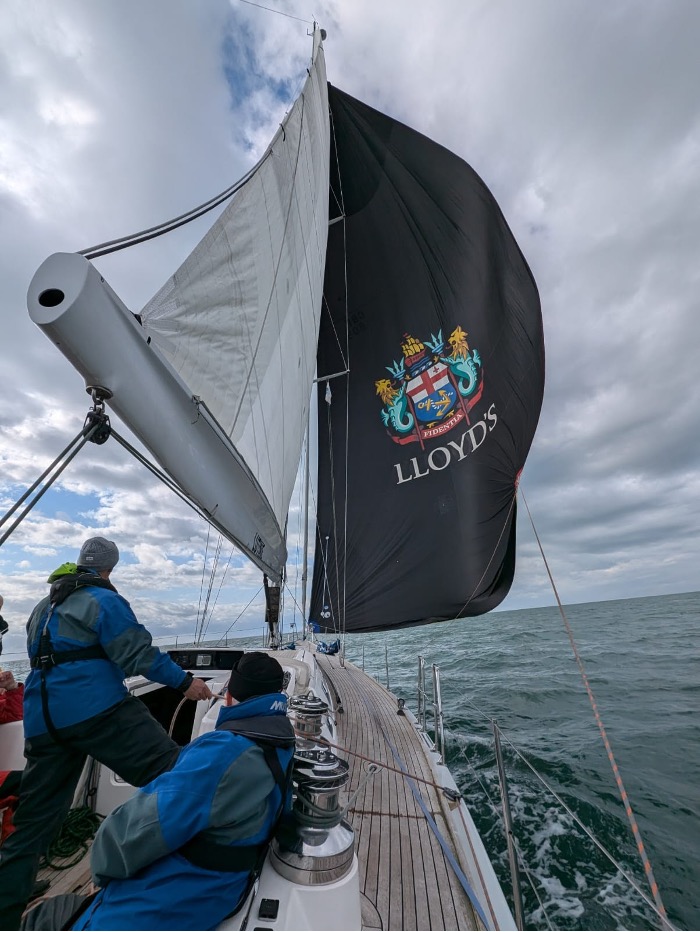
Friday morning was an early start to catch the tide for the cross-channel passage to Alderney. The sea was relatively calm and the winds were initially light, so the engine was required to make way. However, later on in the morning the wind filled in and we got Lutine underway with a full set of sails up. We even tried the cruising chute for a while as the wind was out of the NE. This lasted until the wind picked up and became squally and rainy, which persisted for most of the crossing but made for some excellent sailing.
Lutine on the passage across the Channel to Alderney
Landfall on Alderney was made about 10 hours after leaving Portsmouth, with the crew picking up a buoy in Braye Bay, it being dark by now. After relaxing with a couple of drinks and a meal onboard, kindly previously prepared by Richard, it was time to hit the bunks for another early(ish) start the next morning for the approximate three-hour trip down to St Peter’s Port on Guernsey, arriving around 11.00 am. This was another pleasant sail and we ended up on the visitor pontoon in the main harbour.
Showers ashore were the first priority, followed by refreshments in the Guernsey Yacht Club, and a catch-up on the Ladies America Cup final (Great Britain vs Italy… alas, we know the outcome of this race) and one of the British Men’s challenge races against New Zealand.
The evening was spent in the Ship and Crown by the main harbour to celebrate Richard’s birthday, with plenty of wine and good food.
Dinner in the Ship and Crown, St Peter’s Port, celebrating Richard’s BirthdayThe bar (the other sort …) into the inner harbour at St Peter’s Port exposed at low tide
The destination for Sunday was back across the Channel to Studland Bay, just outside Poole. This was a more leisurely start as we needed to catch the tidal race between Alderney and the Cherbourg peninsula, which we did under full sail in light winds but still made 11+ knots over the ground. The sail across the Channel started with mild SE winds, which filled in during the day, requiring the first reef in on the main sail. This turned out to be another excellent day’s sail, making the approximate 80 Nm crossing in around 10 to 11hours. Getting the main sail down was a little fraught in the dark and late in the evening with a heavy swell, but we eventually managed this and dropped anchor (just outside the restricted zone, as planned). It was gone midnight by the time we hit the bunks, having had the evening meal on the go during the crossing.
Monday was another early start to get back from Poole to the Solent via the north passage through Hurst Castle. Unfortunately, we had light SE winds which required the engine on all the way back to Portsmouth, but with the sun out, this was quite pleasant and enabled us to finish up the provisions with breakfast and lunch on the go in relative calm.
Guess where…
Our thanks go to LLYC for the charter of Lutine, and special thanks to our skipper for the weekend, Mick Brown, who joined in the fun as much as we enjoyed his company, and being the first time out with us, let us sail Lutine how she should be.
and for some the weekend was all too much – under motor back through the Solent
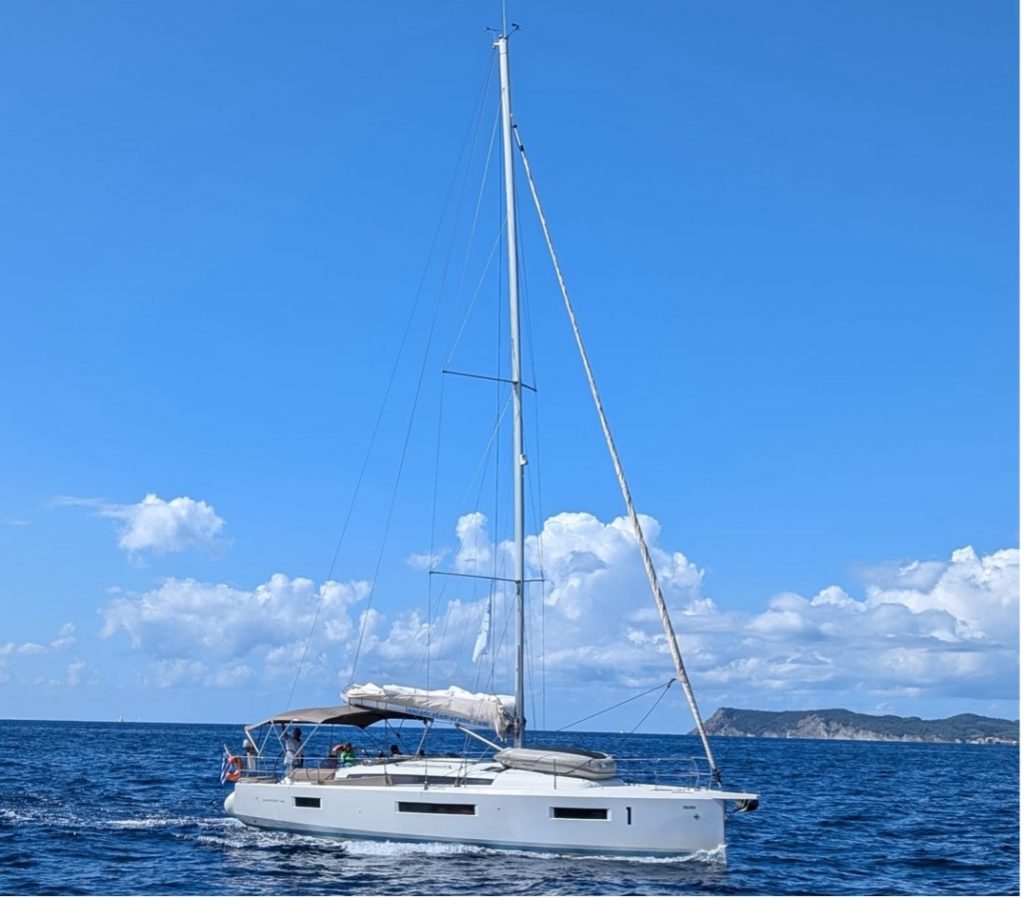
Eleven intrepid sailors from the club flew out to Corfu for a week’s charter between the 7th and 14th September. Two yachts were chartered: Irini, a Sun Odyssey 440, and Pinot Gris, a Bavaria 46 Cruiser Style (the crew thought that ‘Style’ referred to the fact it had underwater lights … ). The home base for both yachts was Gouvia Marina, just north of Corfu main town. Everyone flew out a day or two earlier, and some stayed on for a few days after the charter to relax and unwind after, what turned out to be an eventful week, certainly weather-wise.
The week started on Saturday night after we had taken over and provisioned the boats, with a club meal at Takis Taverna in Gouvia, with good food and plenty of beer and wine.
First night the crews of Pinot Gris and Irini together for pre-charter dinner
Once we got going on the Sunday, both boats made way south and across to the mainland to a bay just north of Igoumenitsa for a lunch stop and swim. This was a short cruise of about 15NM under engine as the wind was very light and all over the place in terms of direction. It was also very hot with temperatures hitting over 30 degrees.
Irini motoring in light air
The night stop for both boats was a bay called Plataria Harbour. This turned out to be a lovely stop with the boats anchored just off the beach, and a short dinghy ride to the quay, which we took advantage of with a meal ashore that evening.
Unfortunately, in the morning, Pinot Gris reported that their batteries were not holding charge. Mind you, they had a big fridge/freezer on board and the heads were electric, so this was somewhat critical. In the end it was decided by their charter company that they should make for Petriti, across the strait on Corfu Island to get the batteries replaced.
While Pinot Gris made for Corfu Island, Irini headed further south to the harbour town of Syvota. This was another fabulous spot tucked in and safely anchored in a sheltered setting between two islands. It was also an ideal spot for the crew to get some swimming and snorkelling in, and visit the local town. However, once settled we received a severe storm warning (on our phones!) with rain, thunder and lightning, plus strong winds heading our way. But the wind didn’t pick up that much where we were and for Irini, it turned out to be a really pleasant evening, and the crew enjoyed G&Ts or Metaxa and peach juice pre-dinner cocktails, and a meal aboard washed down with plenty of wine. Pinot Gris was safely in harbour in Petriti but did suffer with very heavy downburst of rain and strong winds.
This was to be the way the weather was to develop for the rest of the week.
The next day, Tuesday, normal service resumed with Pinot Gris making its way south and Irini southwest to rendezvous at Gaios on Paxos Island. This was another lovely setting, with both boats moored side by side in the main approach to the town quay, with anchors out and stern lines ashore in typical Mediterranean style. This offered the opportunity for both crews to eat together ashore.
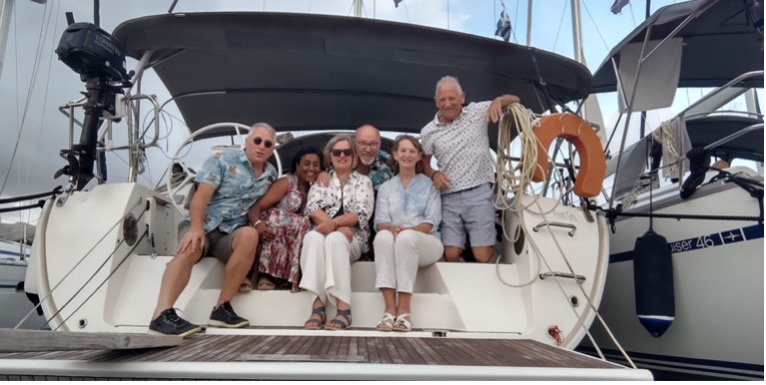
Sarah, Duncan, Kevin & Penny, the crew of Irini (minus Bubs taking the photo)
Wednesday, both boats made their way back to back across to the mainland, with a lunch stop at the Blue Lagoon close to Syvota, with more swimming and snorkelling, after which it was a northerly passage to Ormos Valtou Bay for the night stop. This was a striking bay set in and around a National Park. Both boats anchored near each other in a very quiet bay, with only a couple of other yachts anchored. It was also an excuse for your Commodore to invite the crew of Pinot Gris aboard for after-dinner drinks, which rolled fairly late into the evening.
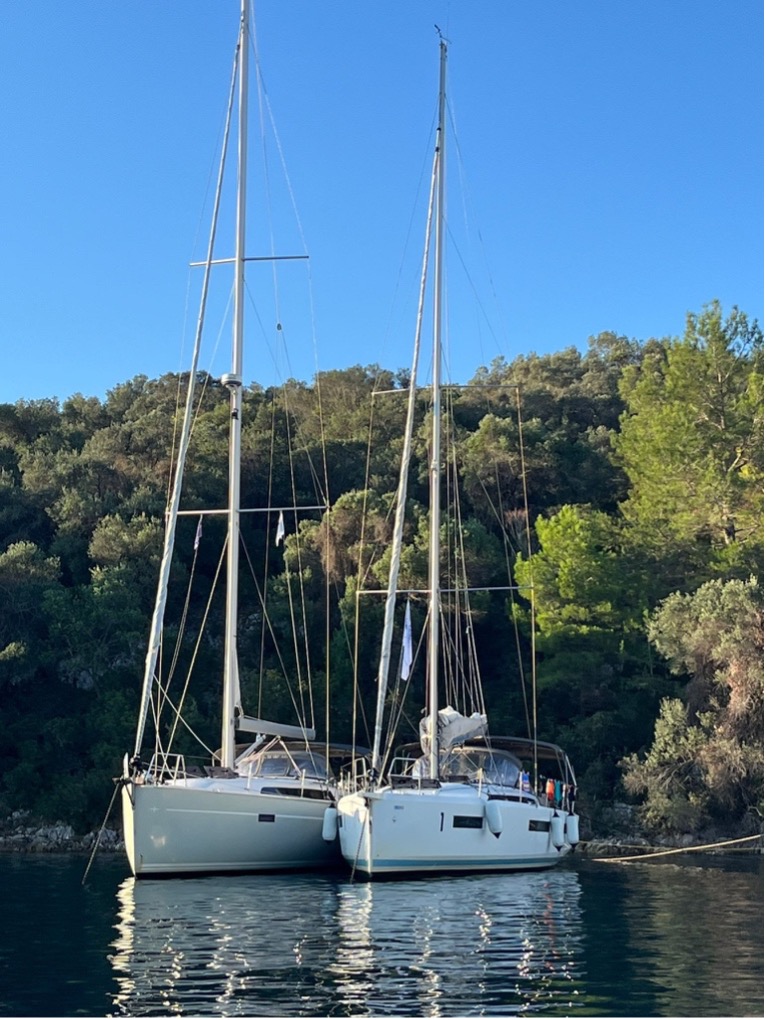
Pinot Gris and Irini moored together in Paxos
On Thursday, after breakfast, both boats motor-sailed north towards Corfu Town. Winds were again light and the weather very pleasant. We decided that we would call into Gouvia Marina, our base port, to fill up with fuel to avoid the usual end-of-charter rush. Then we made our way a little further north and finally anchored in Kalami Bay, about 7NM from Gouvia, directly adjacent to the approximate 2-mile-wide strait between Corfu and Albania. Unfortunately, the weather turned on us and started blowing in from the SE leaving us a little exposed. As a result, the swell in the bay also picked up making it tricky to use the dinghies to get ashore to dine in one of the tavernas. The crew on Irini elected not to attempt this as we had some food left onboard. However, the crew of Pinot Gris did manage the crossing – a case of need must at this stage, with nothing left in the larder.
The night wasn’t too pleasant and anchor watches were the order of the night given we had nothing behind us except for beach and rock. Conditions did settle down over night but started to pick up again in the morning. There was thunder and lightning around, which appeared to be over the highland of Corfu Island.
At this point Irini decided to make back for Gouvia to try and find some more settled conditions. After clearing the bay, the weather really deteriorated, and despite trying to make for clearer skies further south, visibility dropped to virtually zero, the rain started lashing down and we experienced some very strong gusts, which I estimated to be at least F8, which combined with very heavy rain and spindrift being lifted off horizontally, did make for some very unpleasant conditions. This went on for about 5 to 10 mins but felt a lot longer, and was certainly the worst conditions I have ever been at sea in. Fortunately, the storm passed as quickly as it came and I managed to get back on track for Gouvia. I have to admit that I am downplaying what actual went on and how I felt at the time, but we got through it in one piece with no damage to boat or crew.
In the end we crossed the bay in beautiful conditions and headed back to the marina, a little earlier to give everyone on board a rest.
Meanwhile, back in Kalami Bay, they did experience some strong winds and rain but then things went very quiet and calm as if they were in the eye of the storm, before they left the bay. In the end they enjoyed quite a pleasant day before making for Gouvia and return to the marina.
Jeremy, Catherine, Sue, Mark, Nikki and Howard, the crew of Pinot Gris
According to our Greek Contingent – Andreas, this was typical of a mini Medicane weather system!
Once back in the marina, we all enjoyed the obligatory end of rally dinner, where stories and tales of seamanship were swapped. It was a fabulous way to end the week before heading for home, or in some cases staying on for a few extra days on Corfu.
Three boats took to the water for our 2024 Spring Rally Thursday 6th to Saturday 8th June, including: Jus Lymin, skippered by Paul Jeffs, Magnus Tao, skippered by Peter Puttock and NickNack, with Nick and Gail Lever.
The Rally started off on the Wednesday night with the crew of Jus Lymin joining Magnus Tao in Gosport for a meal in the Great Wall Chinese restaurant. Despite the D-Day events going on in and offshore at Portsmouth on the Wednesday, we saw very little of this as Jus Lymin made her way round to Gosport Marina. All we saw was the drone light show off Southsea later after our meal.
On Thursday morning, Jus Lymin and Magnus Tao took part in a race out to the Nab Tower and back for a finish off Cowes for the Club’s Rose Bowl Challenge.
Jus Lymin – Skipper Paul (in the middle) and some of the crew
The start for the race (or more correctly, “fast cruise in company”) was between the No Man’s Land and Horse Sands Forts, with Jus Lymin and Magnus Tao crossing at exactly the same time. The weather was a little mixed with some sun and rain showers, but the wind and tide were favourable. Mangus Tao made it to the tower first, on what was the more favourable course, and in the end crossed the finish line off Egypt Point first with a total elapsed time of 4hrs55mins. Just Lymin romped over the line in 5hrs28mins.
Unfortunately NickNack couldn’t make the cruise out to Nab Tower due to prior commitments but joined the rest of us in Cowes later in the day for the evening meal.
The next day it was planned for the three boats to make their way to Lymington. After leaving Cowes Jus Lymin crossed over to the Beaulieu River and up to Bucklers Hard for lunch. However, the wind had picked up considerably over night and on leaving Beaulieu River and trying for Lymington after some back-and-forth tacks across the Solent, we resorted to using the engine to make the right course. This was OK initially but wind over tide made for a very choppy ride. It was at this point the engine lost power and eventually packed in. After some gallant attempts by Paul to get it going again, there was nothing left but to turn around and make way back to Cowes where we knew we could get a tow back in so we could sort the engine out.
Jus Lymin making her way back into Cowes
Magnus Tao and NickNack did make it to Lymington, but by all accounts, it was not a pleasant trip.
Meanwhile back on Jus Lymin, once we were safely moored up, the cause of the problem was found to be a blocked fuel line,. In the sloppy seas, crud in the fuel tank had been churned up causing the blockage. At this point it was too late for Jus Lymin to join the others, so stayed in Cowes and to eat on board and generally chill. The next day, Saturday, we all made our own ways back to our home ports and marinas in conditions somewhat more pleasant than the day before.
That’s sailing for you …
As part of the purpose of the Rally was the Rose Bowl Challenge, and given that only two boats took part, once corrected times had been calculated there was very little in it between Jus Lymin and Magnus Tao. In fact looking at the handicaps for the two boats, which vary considerably between the different handicap systems, the actual best corrected time for either boat switches around but still literally within a couple of minutes or so, therefore as Commodore, I have decided to call it a draw with honours with the Challenge going to both Jus Lymin and Magnus Tao … a controversial decision, maybe yes, but one that should keep both Skippers and Crews happy.
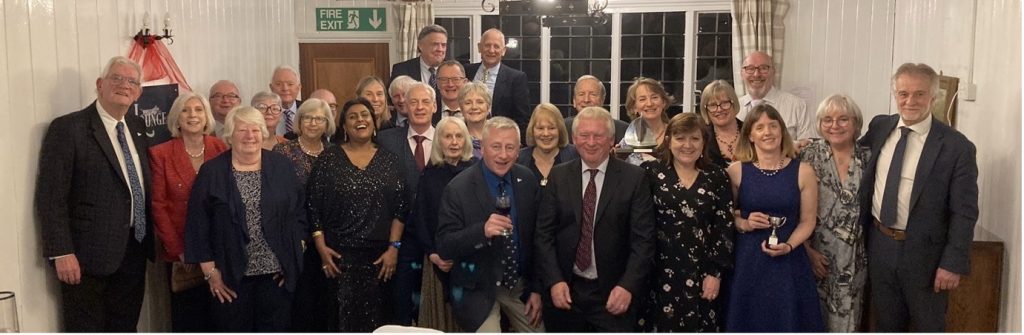
There was a good turn out from the Club with 32 members attending the 2024 Annual Dinner and Prize Giving on 15th March 2024 at the Limpsfield Chart Golf Club
The Golf Club was very accommodating with a lovely little bar, a beautifully dressed dining room and reasonably priced drinks and three course meal. The evening was a great chance to get together to celebrate the Club and its activities
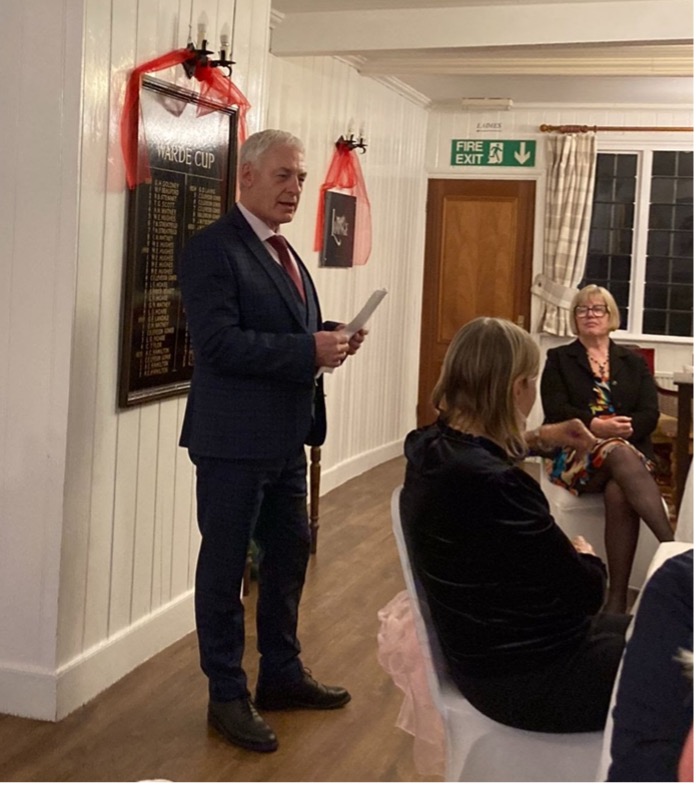
Commodore’s address to the Club
The Annual Dinner was also the opportunity for the Commodore to present some of the Club’s trophies awarded to individual Club Members, for their participation and successes during 2023. These were as follows:
The Rose Bowl– this trophy was presented to the Club by Bob Perry for any “race” taken place during a Club Rally. The Rose Bowl was awarded to Paul Jeffs, who on his (new to him) yacht, Jus Limin’, won the race during last May’s Spring Rally. Unfortunately, Paul couldn’t make the Annual Dinner, but the Bowl was presented to Paul by Lesley, who won it in 2022.
The Round the Island (RTI) Plaque– this plaque was presented to the Club by Henry Moore for any Club Member with the fastest time in the official Round the Island Race. Once again for the fourth year running, this award went to Lesley Brooman on her yacht Jumunu.
Lesley being awarded the RTI Plaque
The Nigel Kitchen Memorial Trophy – presented to the Club by Paul May for the best contribution to Oxted Offshore Sailing Club. This year the trophy was awarded to Howard and Nikki Richardson, who despite taking part in many of the races in the past on their power boat, Riptide, cannot win as they are often found bobbing around at the start or finish acting as the Club’s Committee Boat.
Howard and Nikki receiving the Nigel Kitchen Memorial Trophy
The Pugh Trophy – this little cup was awarded by Jasper Dale for “endurance” in heavy weather. This year it was awarded to Sarah Southcott for her perseverance during strong winds and heavy, lumpy seas during last year’s Spring Rally.
The prestigious Pugh Trophy being awarded to Sarah